

 Tiếng Việt
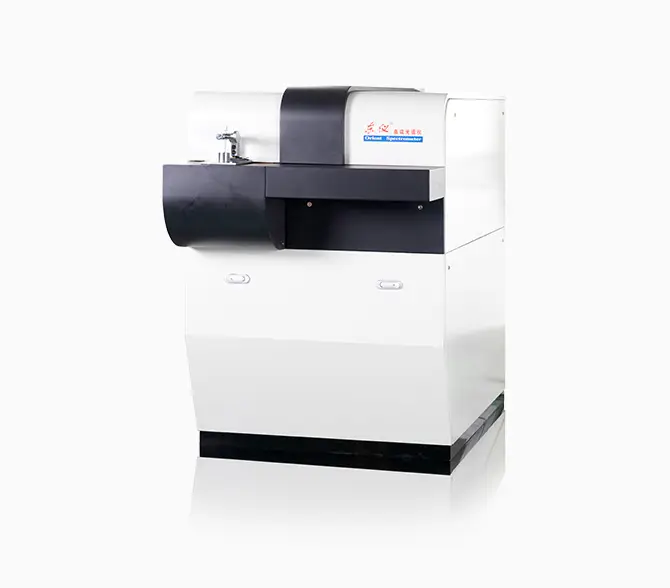
DF-170 PMT Detector Metal Analyzer
Discover the DFAIC DF-170 OES PMT detector metal analyzer. An advanced optical emission spectrometer with ultra-high sensitivity for precise trace element analysis (C, S, P, N) in foundries and QC labs. Read more!
Product Information
PMT Detector Metal Analyzer DF-170: The Ultimate Choice for the Metallurgical Industry
In the modern casting and metallurgical industries, precise control of elemental composition is the vital factor that determines product quality. If your business is searching for a rapid, highly accurate analysis solution capable of detecting elements down to trace levels, the DF-170 OES PMT detector metal analyzer from DFAIC is the perfect answer (p. 1). Unlike budget-friendly optical emission spectrometers on the market that utilize conventional CCD or CMOS linear sensors, Photomultiplier Tube (PMT) technology delivers exceptional performance that every quality control (QC) laboratory demands (p. 2).
Why Invest in a PMT Detector Metal Analyzer?
Photomultiplier Tubes (PMTs) have long been recognized as the “gold standard” in Optical Emission Spectrometry (OES) (p. 2). For stringent alloy analysis applications, a PMT detector metal analyzer demonstrates absolute superiority over alternative technologies due to several core advantages:
- Extreme Sensitivity: The PMT detector can amplify weak light signals millions of times (p. 2). This allows for the ultra-precise detection of trace elements at parts-per-million (ppm) levels.
- Trace Element Analysis: It easily measures challenging light elements such as Nitrogen (N), Carbon (C), Sulfur (S), and Phosphorus (P) within complex ferrous and non-ferrous matrices (p. 2).
- Outstanding Repeatability: PMT technology minimizes deviation between sequential sample sparks, ensuring that your analytical data remains consistent and reliable across shifts.
Unlocking the Advanced Technology of DFAIC DF-170 OES
The DF-170 OES is specifically engineered for harsh industrial plant environments (p. 1). It combines premium optical design with innovative PMT upgrades to offer unparalleled structural reliability (pp. 1-2).
1. Paschen-Runge Optical System with 750mm Focal Length
The heart of the DF-170 is its Paschen-Runge optical structure, featuring an extended focal length of 750mm (p. 2). This setup works in tandem with a holographic original concave grating ruled at 2400 lines/mm, covering a wide wavelength spectrum from 140nm to 750nm (p. 2). Consequently, the emitted light from the metal spark is sharply separated before reaching the PMT detector, eliminating spectral overlap and background interference (p. 2).
2. Breakthrough Dark Current Reduction Technology
A common bottleneck in traditional PMT-based spectrometers is the presence of “dark current,” which generates electronic noise and degrades the lifespan of the photomultiplier tube (pp. 1-2). DFAIC has completely resolved this issue in the DF-170 by integrating an intelligent built-in light system inside the optical chamber (p. 1). This proprietary technology reduces the dark current to a great extent, vastly improving the signal-to-noise (S/N) ratio and extending the operational life of the 28mm diameter PMT detector (pp. 1-2).
3. Oil Backstreaming Prevention System
To protect expensive internal components, the DF-170 maintains a rigorous vacuum environment inside its optical chamber (p. 1). A specialized computer-controlled vacuum pump ensures that its active pumping cycle accounts for less than 5% of the total spectrometer working time (p. 1). This engineering feat prevents vaporized oil backstreaming from contaminating the lenses or damaging the highly sensitive PMT detector, while simultaneously doubling the lifespan of the pump itself (pp. 1-2).
4. High-Precision Automatic Thermostatic Control
Thermal drift can cause significant wavelength shifts in shifting factory temperatures. The DF-170 eliminates this variable with a highly precise, automated thermostatic system that keeps the optical chamber stabilized at 30°C (p. 2). The temperature fluctuation is strictly locked between -0.2°C and +0.2°C (p. 2). This constant environment guarantees that the PMT detector receives light at the exact same spatial coordinate every single time (p. 2).
Real-World Applications of the DF-170 in Manufacturing
The DF-170 PMT detector metal analyzer is capable of analyzing up to 3 distinct metal matrix composites simultaneously, including Iron (Fe), Copper (Cu), Aluminum (Al), Nickel (Ni), Zinc (Zn), Magnesium (Mg), and Lead (Pb) matrices (pp. 1-2).
With an incredibly fast testing process requiring only 10 to 20 seconds per sample cycle, this equipment enables foundries, steel mills, and scrap recycling centers to optimize 100% of their operational efficiency (p. 2). It minimizes defective batches, reduces raw material waste, and elevates your brand’s quality reputation in the global marketplace.
Be the first to review “DF-170 PMT Detector Metal Analyzer”
Related products

SPECTROMETER

SPECTROMETER


SPECTROMETER
SPECTROMETER








Reviews
There are no reviews yet.