

 Tiếng Việt
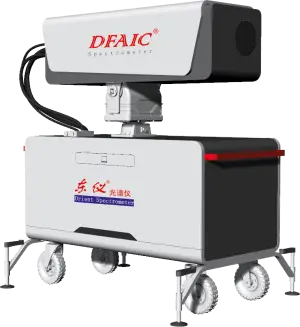
Laser-Induced Breakdown Spectroscopy (LIBS)
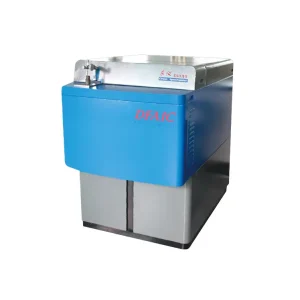
The laboratory Laser-Induced Breakdown Spectroscopy (LIBS) system features a 150-900nm wavelength range and 0.005nm resolution, offering rapid, accurate, and non-destructive elemental analysis. Discover the structure and applications of LIBS!
Product Information
Laser-Induced Breakdown Spectroscopy (LIBS) Devices: A Breakthrough Solution for Elemental Analysis
In the era of advanced industrial manufacturing and material research, rapidly and accurately determining the chemical composition of materials plays a decisive role. Among modern analytical technologies, the Laser-Induced Breakdown Spectroscopy (LIBS) device stands out as an optimal solution due to its superior analysis speed, direct measurement capability, and elimination of complex sample preparation.
What is a Laser-Induced Breakdown Spectroscopy (LIBS) device?
A Laser-Induced Breakdown Spectroscopy (LIBS) device is an atomic emission spectroscopy system. This technology utilizes a high-energy pulsed laser focused onto the surface of a sample.
The intense energy from the laser ablates a microscopic amount of material, generating a high-temperature plasma plume. As this plasma cools, the excited electrons of atoms and ions return to lower energy states, emitting characteristic light radiation (spectral lines) unique to each element. By capturing and analyzing these spectral lines, the system accurately identifies the elements present in the sample.
Advanced Configuration of High-Performance Laboratory LIBS Systems
Unlike standard handheld devices on the market, a high-configuration laboratory Laser-Induced Breakdown Spectroscopy (LIBS) device incorporates sophisticated optical modules to ensure absolute accuracy:
1. Flat-Field Concave Grating System
This is the heart of the optical system, responsible for separating the plasma emission light into monochromatic wavelengths. Thanks to the flat-field concave design, the device can focus light directly onto the sensors without passing through multiple internal reflective mirrors. This design minimizes the optical structure, resists industrial vibrations, and maintains maximum optical stability.
2. 6-Channel Linear CCD Detector Array
To achieve both a wide scanning range and ultra-fine resolution, the device integrates 6 linear CCD detectors arranged in series. This combination delivers an impressive spectral resolution ranging from 0.005 nm to 0.5 nm, allowing the system to isolate and clearly distinguish adjacent spectral lines in complex material matrices like high-grade alloys.
3. Comprehensive Wavelength Coverage from 150 to 900 nm
The system features an ultra-wide spectral range spanning from the vacuum ultraviolet (VUV), ultraviolet (UV), visible light (Vis), to near-infrared (NIR) regions. With this extensive range, the machine can quantify almost all elements in the periodic table, including challenging non-metals with short wavelengths such as Carbon (C), Sulfur (S), Phosphorus (P), Oxygen (O), and Nitrogen (N).
4. Dual-Axis Fiber Optic Collection (Axial & Radial)
The device utilizes a premium fiber optic system that collects plasma light signals simultaneously from both directions: vertical (axial) and horizontal (radial). This mechanism captures the full energy profile of the plasma plume, eliminates background noise, and significantly improves the limit of detection (LOD) for trace elements.
Practical Applications of LIBS Devices in Industry and Research
Thanks to its powerful configuration, the desktop Laser-Induced Breakdown Spectroscopy (LIBS) device is widely applied in several core fields:
-
- Metallurgy and Quality Control (QA/QC): Rapidly analyzes the grade of steel, aluminum alloys, and copper alloys, and checks for impurities during the melting process without damaging the structural integrity of the product.
- Geology, Mining, and Archaeology: Provides qualitative and quantitative analysis of rock samples, mineral ores, and core moisture, or determines the composition of artifacts directly in the laboratory.
- Environmental Monitoring: Swiftly detects hazardous heavy metals (such as Lead, Mercury, Cadmium) residing in soil, water, or industrial waste.
- Advanced Material Research: Assists research institutes in analyzing material surface structures and multilayer coatings through depth profiling capabilities enabled by consecutive laser pulses.
Conclusion
The laboratory-grade Laser-Induced Breakdown Spectroscopy (LIBS) device, equipped with a 6-CCD array and a flat-field concave grating, is the technological key to optimizing elemental analysis workflows. Far surpassing handheld devices in both resolution and wavelength range, it represents a high-value investment for enterprises and organizations seeking precise, safe, and highly efficient material measurement solutions.
Be the first to review “Laser-Induced Breakdown Spectroscopy (LIBS)”
Related products
SPECTROMETER
SPECTROMETER
SPECTROMETER
SPECTROMETER







Reviews
There are no reviews yet.