
 Tiếng Việt
User manual
Why Multiple RoHS 2.0 Test Equipment Are Required to Be Used Together in Your Factory Lab
02
Oct
Oct
Why Multiple RoHS 2.0 Test Equipment Are Required to Be Used Together in Your Factory Lab
For electronics and electrical component manufacturers, meeting the latest RoHS 2.0 compliance testing standards is a mandatory passport to entering strict markets like the European Union (EU), the USA, and Japan. Non-compliance can lead to catastrophic consequences: entire shipments seized, heavy financial fines, and permanent damage to brand reputation.
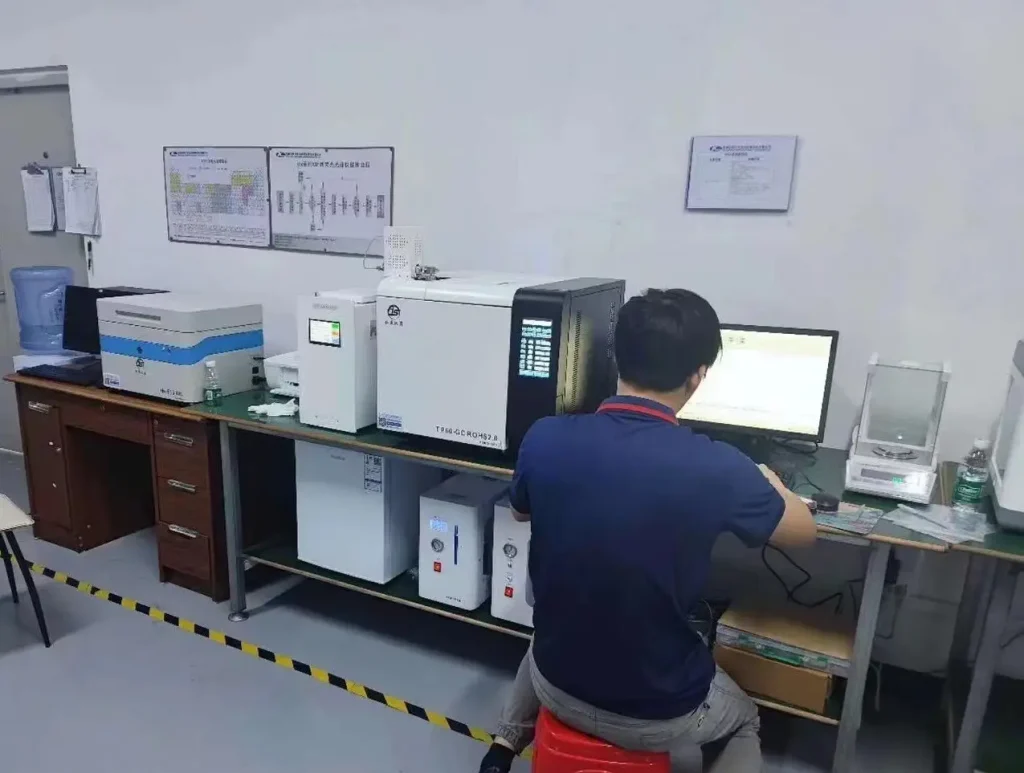
To control outgoing product quality, many businesses choose to build an in-house laboratory. However, a common misconception is believing that investing in a single XRF spectrometer is enough. In reality, to comprehensively test for all 10 restricted hazardous substances under the current regulations, you must use a combination of multiple RoHS 2.0 test equipment. Here is the technical breakdown from our application engineers on why this synergy is essential.
1. The Nature of RoHS 2.0: One Instrument Cannot Detect 10 Substances
The RoHS 2.0 directive (Directive 2011/65/EU and its amendment EU 2015/863) strictly regulates 10 hazardous substances in electrical and electronic equipment. The critical challenge is that these substances fall into two entirely different chemical categories:
- Inorganic Group (Heavy Metals): Lead (Pb), Mercury (Hg), Cadmium (Cd), Hexavalent Chromium (Cr VI).
- Organic Group (Flame Retardants & Plasticizers): PBBs, PBDEs, and especially the 4 newly added Phthalates (DEHP, BBP, DBP, DIBP).
Every analytical technology has its unique strengths tailored to specific material states. There is no single RoHS testing instrument on the market that can simultaneously measure solid inorganic heavy metals and extract volatile organic polymer compounds. This is why a compliant lab requires a collaborative ecosystem of equipment.
2. The Strategic Role of Each RoHS 2.0 Test Equipment
To optimize the inspection workflow, each piece of equipment handles a distinct, irreplaceable position in the analytical pipeline.
                  ┌──────────────────────────────┐
                  │   INCOMING COMPONENT/MATERIAL │
                  └──────────────┬───────────────┘
                                 │
                   [ Step 1: Non-Destructive Screening ]
                                 ▼
                     ┌───────────────────────┐
                     │ 🔬 XRF Spectrometer   │
                     └───────────┬───────────┘
                                 │
         ┌───────────────────────┴───────────────────────┐
   🟢 COMPLIANT (Safe Zone)                        🟡 RISK DETECTED / SUSPECT
         ▼                                               ▼
┌──────────────────┐                     [ Step 2: Destructive Deep Analysis ]
│  Pass / Proceed  │                                     ▼
└──────────────────┘         ┌───────────────────────────┴───────────────────────────┐
                             ▼                                                       ▼
                ┌───────────────────────────┐                           ┌───────────────────────────┐
                │     🧪 GC-MS System       │                           │    ⚛️ ICP-OES System      │
                ├───────────────────────────┤                           ├───────────────────────────┤
                │ Accurately quantifies 4   │                           │ Analyzes trace levels of  │
                │ Phthalates & Organics     │                           │ Lead, Cadmium, & Mercury  │
                └───────────────────────────┘                           └───────────────────────────┘
🔬 XRF Spectrometer – The Ultra-Fast Gatekeeper
The XRF spectrometer (X-ray Fluorescence) is the primary and indispensable first-line tool. It fires X-rays at the sample surface to trigger element emission.
- Advantages: Extremely fast measurement speed (1 to 3 minutes) and completely non-destructive (components can still be used after testing).
- Limitations: While XRF excels at rapid screening for heavy metals like Lead (Pb), Mercury (Hg), and Cadmium (Cd), it is blind to the 4 organic Phthalates. Furthermore, XRF only measures total Chromium; it cannot distinguish between safe Trivalent Chromium (Cr III) and toxic Hexavalent Chromium (Cr VI).
🧪 GC-MS System – The Weapon Against Organic Phthalates
The 4 Phthalates added in RoHS 2.0 typically hide in plastic casings, cable jackets, and insulating tapes. To catch these substances, a plant needs a GC-MS (Gas Chromatography-Mass Spectrometry) system.
- Role: Plastic samples are cut, dissolved in solvents, and vaporized inside the machine. GC-MS separates individual organic molecules and accurately quantifies their concentration down to parts-per-million (ppm) levels. This is the only way to ensure your products are free from Phthalate traps.
⚛️ ICP-OES or ICP-MS – Absolute Precision for Trace Heavy Metals
When an XRF scan returns a borderline result near the restricted threshold (the “Gray Zone”—for instance, when the Lead limit is 1,000 ppm and XRF measures 950 ppm), a factory cannot risk letting it pass. This requires an ICP-OES system.
- Role: The test sample is completely digested using strong acids and introduced into a plasma torch at temperatures up to 10,000°C. ICP-OES/MS offers ultra-high sensitivity, analyzing trace heavy metals to deliver the definitive referee result.
⚗️ UV-Vis Spectrophotometer – The Expert on Hexavalent Chromium (Cr VI)
Because XRF cannot distinguish chemical valency states, a UV-Vis spectrophotometer combined with a chemical colorimetric method is deployed to isolate and quantify toxic Cr(VI) found in anti-rust plating layers on screws and circuit boards.
3. The Economic Equation: Synergistic Investment Saves Money
Many business owners hesitate due to the upfront cost of a multi-instrument RoHS 2.0 laboratory setup. However, looking at the Return on Investment (ROI), this combination is the most cost-effective solution:
- Eliminating Third-Party Testing Costs: Outsourcing tests to independent laboratories (such as SGS or Eurofins) for every batch incurs high costs and a 3-to-5-day lead time that slows down production. In-house equipment grants real-time quality control.
- Insurance for Million-Dollar Orders: The investment for a complete RoHS testing package is minor compared to the financial ruin of having a shipment rejected by an overseas client or destroyed by foreign customs over banned substances.
| Criteria | Using Only 1 XRF Spectrometer | Using the Equipment Combo (XRF + GC-MS + ICP) |
|---|---|---|
| Testing Coverage | Heavy metals only. | Comprehensive 10/10 substances (Both metals & plastics). |
| Legal/Regulatory Risk | High. High probability of missing Phthalates and Cr VI. | Zero. Ensures absolute compliance with RoHS 2.0. |
| Operational Speed | Fast screening for 100% of incoming raw materials. | Optimized: XRF for quick screening -> GC-MS/ICP for deep suspect analysis. |
Conclusion & Solution for Your Factory
No single magic instrument can solve the RoHS 2.0 puzzle alone. Pairing the rapid screening speed of XRF with the deep analytical precision of GC-MS and ICP is the standard formula for a bulletproof quality management system.
Are you looking for the optimal laboratory configuration tailored to your production scale and budget? Do you need a technical partner capable of providing turn-key technology transfer?
📞 Contact us today via Hotline: 0986.666.914 or Email us: marketing@maxlab-jsc.com. Our application engineering team will conduct an on-site assessment to design the perfect RoHS 2.0 test equipment solution for your business!

