
 Tiếng Việt
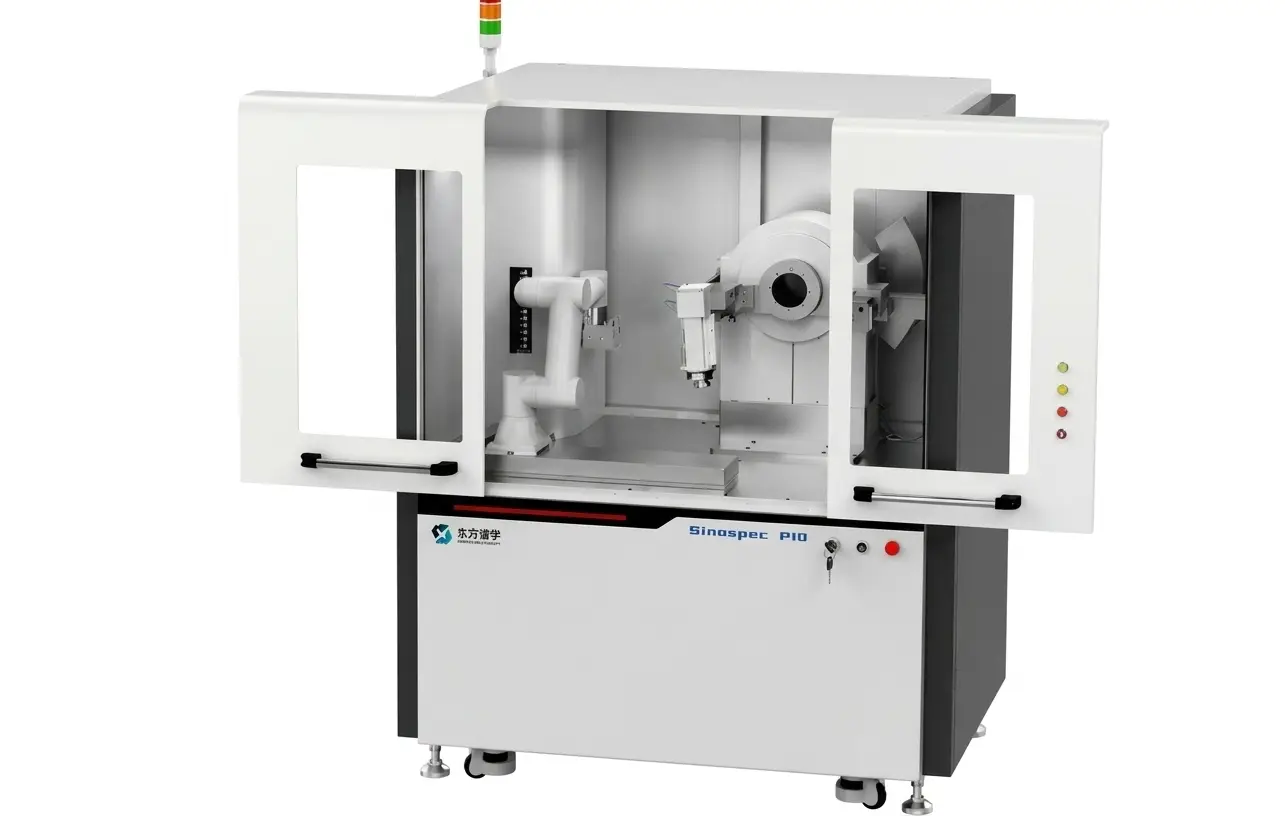
Sinospec P10 XRD Spectrometer
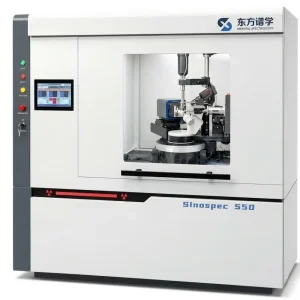
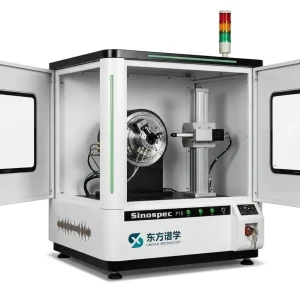
Discover the Sinospec P10 XRD spectrometer from Maxlab: a high-power X-ray diffraction system featuring an internal 6-axis robot for 24/7 unattended, lights-out laboratory automation and high-throughput materials research.
Product Information
Revolutionizing Automated Laboratories with the Sinospec P10 XRD Spectrometer from Maxlab
In the rapidly evolving landscape of materials science and structural analysis, modern laboratories face immense pressure regarding throughput and precision. As sample volumes swell, conventional manual workflows—ranging from sample registration and manual loading to method selection and data storage—become critical bottlenecks that severely restrict overall laboratory efficiency.
To break through these operational limitations, Maxlab proudly introduces a pioneering solution: the Sinospec P10. This high-power, fully automated powder XRD spectrometer seamlessly transitions powder diffraction testing from a sequence of manual chores into a completely automated, “lights-out” laboratory operation. Engineered by sinospectra, the P10 integrates advanced core technologies within a single, radiation-safe enclosure, establishing a new benchmark for modern analytical facilities.
1. What is an XRD Spectrometer? Its Vital Role in Materials Research
An XRD spectrometer (X-ray Diffraction) is an essential, non-destructive analytical instrument used to investigate both the macroscopic and microscopic structures of crystalline materials. Unlike chemical analysis methods that only provide elemental concentrations, XRD reveals the precise crystal phase composition, crystallinity, crystallite size, residual stress, and quantitative mineral percentages within a sample.
Whether developing next-generation energy storage batteries, evaluating active pharmaceutical polymorphs, manufacturing semiconductors, or processing minerals, obtaining high-quality XRD data is the cornerstone of successful R&D and quality control. However, legacy XRD systems tie up valuable laboratory resources, requiring technicians to be constantly present to swap samples, recalibrate stages, and configure scans manually. This manual dependency introduces human error risks and caps the practical duty cycle of expensive instrumentation.
2. Sinospec P10 – Redefining the Era of Laboratory Automation
The Sinospec P10 from sinospectra, distributed by Maxlab, represents a paradigm shift in analytical testing by automating the entire powder diffraction experimental pipeline. The system brings together a high-power X-ray source, an intelligent θ/θ geometry, a next-generation energy-resolving detector, an internal six-degree-of-freedom robotic arm, and a high-density sample tower managed by automated task-scheduling software.
High-Density Sample Tower
A key feature of the P10 is its integrated, internal high-density sample storage tower. This intelligent module supports automatic barcode scanning, sample registration, and precise position mapping for every sample holder. Once experimental queues are configured via the control software, the system runs continuously, eliminating idle instrument time and maximizing X-ray source utilization.
Internal Six-Degree-of-Freedom Robotic System
Departing from rigid carousel-style sample changers that offer limited capacity and are prone to mechanical jams, the Sinospec P10 features an agile, built-in 6-axis (6-DOF) robotic arm. This internal robotic system flawlessly executes sample gripping, transferring, and loading into the measurement stage. This drastically shortens sample-changing cycles and eliminates data anomalies caused by human variations in sample placement or orientation.
Automated Measurement Pipeline
The intelligent task-scheduling software of the Sinospec P10 allows users to execute end-to-end experimental routines entirely unattended. The system can call up targeted measurement queues, automatically verify the active status of the X-ray source, load the respective sample via the robot, and apply pre-configured method templates tailored to that specific material type. Users can easily establish a comprehensive library of standard testing templates for high-throughput batch analysis.
Automatic Centering and Sample Recognition
The integrity of a diffraction pattern relies heavily on ensuring the sample surface aligns perfectly with the center of the goniometer circle. On the P10, intelligent position calibration algorithms automatically identify the specific sample holder type and align the sample surface precisely with the X-ray beam focal plane. All relevant sample metadata is automatically logged and cross-referenced without requiring any manual data entry from the technician.
3. Core Technological Advantages of the Sinospec P10 XRD System
Beyond its robotic automation capabilities, the Sinospec P10 delivers the uncompromising analytical performance demanded by advanced research institutions:
- High-Power X-ray Source: Delivers an exceptionally high photon flux density. This significantly compresses scanning times per sample while yielding an outstanding signal-to-noise (S/N) ratio. High power is crucial for identifying hidden trace phases (below 1%) or weak diffraction peaks characteristic of nanomaterials.
- Advanced θ/θ Geometry (0/0 Geometry): This optimal configuration keeps the sample completely horizontal and static during the entire scan, while the X-ray tube and detector move synchronously around it. This allows the P10 to cleanly measure liquid powders or slurries, and easily accommodate specialized in-situ setups (such as live battery charge/discharge cells) without risk of sample displacement due to gravity.
- Energy-Resolving Detector: Possesses powerful capabilities to suppress secondary fluorescent background noise typically triggered when scanning transition-metal-heavy samples (such as Fe, Co, Ni, Mn). The result is an ultra-clean baseline and sharp peak definitions, ideal for flawless structural refinement via the Rietveld method.
4. Lights-Out Lab Operation – The Future of Smart Analytics
The ultimate value proposition of the Sinospec P10 XRD spectrometer centers on its capacity for Continuous Unattended Operation. The system natively supports a 24/7 continuous duty cycle. At the end of a shift, technicians simply fill the high-density storage tower, queue up the tasks via the software scheduling interface, and let the system run overnight.
Both the real-time operational status of the machine and the resulting diffraction data can be managed and monitored remotely over a local area network or the internet. This makes the Sinospec P10 an ideal workhorse for high-throughput industrial laboratories and multi-user central analytical facilities in universities and research institutes where instrument availability is constantly backlogged.
Furthermore, the instrument supports deep Integration with Laboratory Information Management Systems (LIMS). Utilizing standardized communication protocols, the P10 automatically synchronizes analysis results and uploads compiled reports straight to the central database, fully digitizing the enterprise’s quality control workflow.
5. Maxlab – Your Turnkey Partner for Automated XRD Solutions in Vietnam
For a highly sophisticated, robot-integrated XRD system like the Sinospec P10 to run at peak capacity, robust local technical support is vital. As the strategic partner for this technology, Maxlab provides a comprehensive service ecosystem to ensure your automation investment thrives:
- Workflow Engineering and Custom Integration: Maxlab’s application engineers evaluate your laboratory layout, consult on optimal sample tower configurations, and integrate the task-scheduling software with your existing laboratory network.
- Certified Installation and Radiation Safety compliance: We ensure the system complies fully with international radiation safety standards and local nuclear regulatory requirements. Our team fine-tunes the 2θ angular alignment using international standard reference materials to guarantee absolute data accuracy before final handover.
- Advanced Training and Method Optimization: Beyond basic hardware operation, Maxlab hosts specialized training workshops covering automated method creation, diffraction data processing, and quantitative analysis, enabling your team to leverage 100% of the system’s capabilities.
- Preventative Maintenance and Rapid Support: High-power X-ray tubes and precision robotic axes require meticulous preventative care. Maxlab’s localized service team delivers rapid on-site troubleshooting and maintains a stocked inventory of genuine spare parts to keep instrument downtime to a minimum.
6. Conclusion
Transitioning from labor-intensive manual XRD testing to the fully automated, robotic workflow of the Sinospec P10 is a strategic move that slashes operational overhead, eliminates human error, and delivers a massive leap in research throughput. Let the Sinospec P10 XRD spectrometer distributed by Maxlab empower your organization to lead the way into the future of smart, automated laboratories.