
 Tiếng Việt
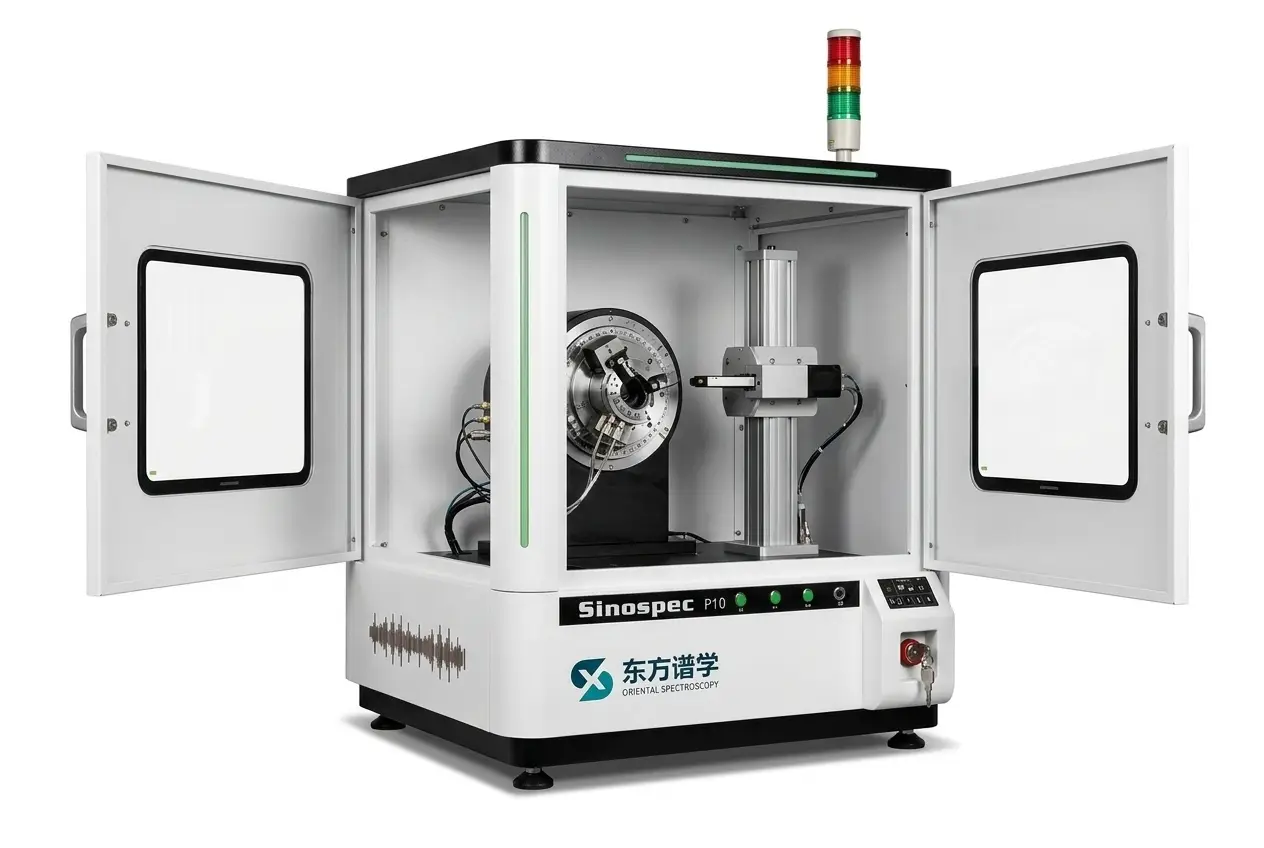
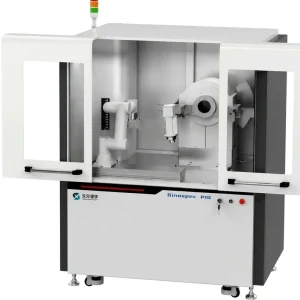
Sinospec D10 X-ray Diffraction (XRD) Instruments
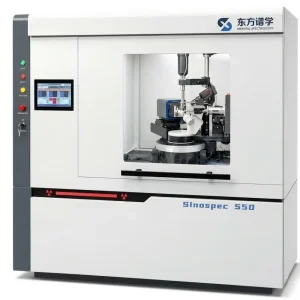
Discover the Sinospectra X-ray Diffraction (XRD) instrument from Maxlab – a breakthrough solution for crystal structure analysis featuring a smart horizontal sample geometry and a high-resolution detector, optimized for battery, pharmaceutical, and thin-film research.
Product Information
Revolutionizing Material Analysis with Sinospectra X-ray Diffraction (XRD) Instruments from Maxlab
In the era of advanced material technology, understanding the microscopic structure of crystalline solids is critical to the quality and success of industrial products. From high-end lithium-ion battery manufacturing, pharmaceuticals, and semiconductors to mining, precise crystal phase identification is a strict requirement. To meet these increasingly demanding analytical standards, Sinospectra X-ray Diffraction (XRD) instruments, officially distributed by Maxlab, have emerged as a breakthrough solution, redefining research and quality control standards in Vietnam.
This article provides a comprehensive look at XRD technology, the outstanding advantages of the Sinospectra line, and why Maxlab is the leading scientific equipment partner trusted by modern laboratories.
1. What is an X-ray Diffraction (XRD) Instrument and Why is it Important?
Core Principle of Operation
An X-ray Diffraction instrument (abbreviated as XRD) is an advanced analytical device based on the diffraction of X-ray beams when interacting with crystal planes in solid materials. When an X-ray beam hits a sample at a specific angle, the atoms within the crystal lattice scatter the X-rays. If the conditions satisfy Bragg’s Law (\(n\lambda = 2d \sin\theta\)), the scattered waves interfere constructively, creating strong diffraction peaks recorded by the detector.
Every crystalline substance has a unique lattice structure that acts as its distinct “fingerprint”. By analyzing the position and intensity of the diffraction peaks on a diffractogram, scientists can accurately determine the phase composition, crystallinity, crystallite size, and internal residual stress of the material.
The Difference Between Chemical Composition and Crystal Phase Analysis
It is common to confuse elemental analysis (such as XRF, ICP-OES) with crystal structure analysis (XRD):
- Chemical Analysis (XRF/ICP): Tells you which elements are in the sample (e.g., the percentage of Iron and Oxygen).
- Structural Analysis (XRD): Tells you exactly how those elements bond with each other (e.g., whether the sample is Magnetite (Fe₃O₄), Hematite (Fe₂O₃), or pure Iron).
Understanding the phase structure is the key to controlling the physicochemical properties of materials, which is why the X-ray Diffraction instrument is an irreplaceable tool.
2. Breakthrough Applications of XRD Technology in Modern Industry
The rapid development of modern materials science introduces critical challenges that older analytical methods cannot address. Today, XRD technology is actively deployed in several cutting-edge fields:
- Battery Research and Manufacturing: Tracking phase transitions in electrode materials (anode and cathode) during charge/discharge cycles. This helps manufacturers optimize the capacity and lifespan of next-generation Lithium-ion batteries.
- Pharmaceuticals and Biotechnology: Identifying the polymorphs of active pharmaceutical ingredients. In the pharmaceutical industry, two different crystalline forms of the same chemical formula can lead to completely different dissolution rates and toxicity levels in the human body.
- Thin Films and Semiconductors: Measuring the structure, thickness, and perfection of nanoscale thin film layers on silicon wafers, which is vital for semiconductor chip fabrication.
- Mining and Cement: Quantifying the exact mineral content (such as clinker, gypsum, limestone) to control kiln operations and guarantee consistent product quality.
3. Sinospectra – Redefining the Modern X-ray Diffraction Instrument Segment
While there are many XRD systems on the market, the Sinospectra brand provided by Maxlab is creating a new technological wave by bridging the gap between convenient benchtop systems and large-scale, high-end research instruments.
Below are the outstanding technical features that make Sinospectra a top choice:
Advanced Goniometer θ/θ Geometry (0/0 Geometry)
In conventional instrument designs, the sample must rotate to scan the X-ray beam. This introduces severe challenges when measuring liquids, slurries, or samples connected to electrical wires (such as in-situ battery testing) because the sample can easily spill or shift.
Sinospectra utilizes an advanced θ/θ geometry: the sample remains completely horizontal and static, while the X-ray tube and detector move synchronously around it. This design provides maximum mechanical stability and significantly expands the capability to integrate special in-situ sample chambers.
Sinospectra utilizes an advanced θ/θ geometry: the sample remains completely horizontal and static, while the X-ray tube and detector move synchronously around it. This design provides maximum mechanical stability and significantly expands the capability to integrate special in-situ sample chambers.
High-Sensitivity Energy-Resolving Detector
One of the biggest pain points for technicians during XRD measurements is secondary fluorescence interference. This occurs when X-rays from a copper (Cu) tube strike samples containing high concentrations of transition metals like Iron (Fe), Cobalt (Co), Nickel (Ni), or Manganese (Mn). This phenomenon dramatically raises the background noise, obscuring weak diffraction peaks.
The new generation detector from Sinospectra possesses exceptional energy resolution capabilities, automatically filtering out these fluorescent background photons without requiring physical filters that lower beam intensity. The result is a ultra-high resolution diffractogram with a remarkably clean background (outstanding S/N ratio), allowing the detection of trace phases below 1%.
The new generation detector from Sinospectra possesses exceptional energy resolution capabilities, automatically filtering out these fluorescent background photons without requiring physical filters that lower beam intensity. The result is a ultra-high resolution diffractogram with a remarkably clean background (outstanding S/N ratio), allowing the detection of trace phases below 1%.
Flexible Modular Design for Diverse Scanning Needs
Not limited to standard powder diffraction, Sinospectra instruments allow flexible configuration changes via smart attachments:
- Grazing Incidence XRD (GIXRD): Scanning at ultra-low incident angles to capture signals from thin surface layers without interference from the thick substrate underneath.
- Capillary Measurement: Ideal for ultra-small sample volumes or air-sensitive materials that need to be hermetically sealed inside a capillary tube.
- In-situ Measurements: Combining the system with high-temperature stages, pressure cells, or electrochemical battery cells to directly observe material structural changes in real-time.
4. Maxlab – Your Trusted Partner for Comprehensive XRD Solutions in Vietnam
Purchasing an X-ray Diffraction instrument is not just a transaction; it is a long-term investment in technology and precision. Maxlab is proud to be the official distributor and technical support provider for Sinospectra XRD lines, committed to delivering outstanding value through three core pillars:
Deep Technical Solution Consulting
The expert team at Maxlab goes beyond just selling instruments; we understand material applications deeply. Whether your laboratory specializes in polymers, lithium-ion batteries, geology, or pharmaceuticals, Maxlab will consult on the optimal configuration (selecting the right X-ray tube, detector, and Rietveld quantitative analysis software) to avoid budget waste and maximize operational throughput.
International-Standard Commissioning and Installation
X-rays are high-energy radiation, meaning equipment safety is always the highest priority. The Sinospectra lines installed by Maxlab strictly comply with international radiation safety certifications. Featuring independent dual-shutter safety enclosures and automatic interlocks, they ensure zero radiation leakage, protecting operating technicians. Furthermore, we calibrate the instrument using international standard reference materials (such as LaB₆ or Al₂O₃) directly at the customer’s laboratory to guarantee 2θ angular accuracy.
Professional Training, Maintenance, and After-Sales Service
Maxlab understands that instrument downtime leads to significant losses for both production units and research facilities. Therefore, we maintain a localized team of support engineers ready for on-site troubleshooting, routine maintenance of water-cooling systems, and X-ray tube condition monitoring. Additionally, Maxlab periodically organizes advanced data analysis workshops, guiding users through phase matching utilizing ICDD PDF databases, ensuring technicians confidently master the technology.
5. Conclusion
Featuring powerful analytical capabilities, absolute mechanical precision, and proprietary detector technology, the Sinospectra X-ray Diffraction instrument serves as the definitive key to unlocking a comprehensive understanding of material structures. Partnered with the comprehensive technical support and prestige of Maxlab, enterprises, research institutes, and universities gain a solid launchpad to accelerate their R&D and quality control workflows.
Contact Maxlab today to receive direct consultation and experience top-tier structural analysis solutions from Sinospectra!