
 Tiếng Việt

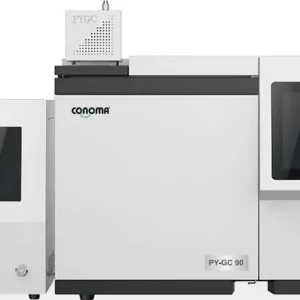
GC-MS 7220 Gas Chromatography-Mass Spectrometry Instrument For RoHS 2.0
Procure a genuine gas chromatography-mass spectrometry instrument (GC-MS 7220) by Conoma, distributed by Maxlab Equipment. The gold-standard laboratory equipment for rigorous RoHS 2.0 compliance testing of Phthalates and flame retardants. Explore now!
Product Information
Gas Chromatography-Mass Spectrometry Instrument: The Gold Standard for Comprehensive RoHS 2.0 Compliance Testing
Against the backdrop of increasingly stringent international technical barriers to trade, controlling the environmental compliance of both incoming raw materials and outgoing products has become a mandatory passport for every exporting enterprise. In particular, the European Union’s (EU) RoHS 2.0 directive and the Chinese national standard GB 26572-2025 impose exceptionally strict concentration limits on hazardous organic compounds.
To satisfy these high-complexity analytical requirements that demand legal validity and ultimate precision, a gas chromatography-mass spectrometry instrument stands as the definitive solution recommended by experts. Officially distributed by Maxlab Equipment, the premium GC-MS 7220 from the renowned brand Conoma has become a core piece of laboratory equipment, empowering factories to elevate their testing capabilities and safeguard their global supply chains.
1. What is a Gas Chromatography-Mass Spectrometry Instrument? Why is it the “Gold Standard”?
A gas chromatography-mass spectrometry instrument (commonly abbreviated as GC-MS) is an elite analytical system at the pinnacle of modern chemical science. This equipment operates by simultaneously combining two exceptionally powerful technologies:
- Gas Chromatography (GC): Serves the role of separating complex chemical mixtures into individual components based on their volatility and interactions with a specialized chromatographic column.
- Mass Spectrometry (MS): Acts as an ultra-sensitive detector that bombards the separated molecules with an electron beam to generate ion fragments, thereby identifying the unique “molecular fingerprint” of each structure and quantifying it with absolute accuracy.
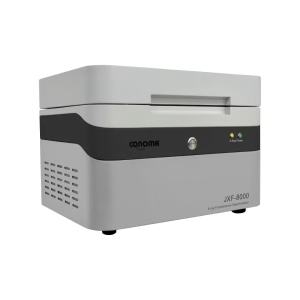
While conventional X-ray fluorescence (XRF) spectrometers are limited to a crude screening of heavy metal elements, a gas chromatography-mass spectrometry instrument possesses the capability to delve deep into the micro-structure of organic compounds. This synergistic combination delivers unparalleled analytical power, establishing the absolute gold standard for legally binding results when conducting RoHS 2.0 compliance testing.
2. Outstanding Advantages of the Conoma GC-MS 7220 Gas Chromatography-Mass Spectrometry Instrument
Meticulously engineered and developed by Conoma, a leading manufacturer of industrial analytical instruments, the GC-MS 7220 model distributed by Maxlab Equipment boasts highly impressive technical specifications and features:
2.1. Maximum Sensitivity – Detection Limits Below 10⁻¹² g
In safety compliance testing, hazardous chemicals often lurk in trace levels with extremely minuscule concentrations that are easily missed by mainstream instruments. The GC-MS 7220 system utilizes an advanced single-quadrupole mass spectrometer filter, driving the detection limit down to an ultra-microscopic level (below 10⁻¹² g). This capability far surpasses the performance of standard market alternatives, ensuring that not a single restricted chemical can escape undetected.
2.2. Highly Stable Specialized Chromatographic Column Technology
The system comes equipped with a premium B-50HT specialized capillary column (Standard dimensions: 30 m × 0.25 mm × 0.25 μm). This chromatographic column is heavily optimized for thermal resistance and chemical durability, allowing chromatographic peaks to separate sharply and cleanly. This minimizes baseline noise or peak overlapping, delivering highly reliable analytical data.
2.3. Intelligent and Synchronized Quantification Workflows
The Conoma GC-MS 7220 utilizes the External Standard Method, which tightly couples qualitative identification (based on unique retention times) with quantitative calculation (based on mass spectra fragmentation). Thanks to this approach, laboratory technicians can determine not only the exact identity of the toxic compound but also its precise concentration within the sample matrix.
3. Comprehensive and Extensible RoHS 2.0 Compliance Testing Capabilities
The reason a gas chromatography-mass spectrometry instrument like the GC-MS 7220 is an irreplaceable piece of laboratory equipment is its massive analytical coverage across the most complex hazardous organic compounds:
- Absolute Accuracy for 4 Phthalate Plasticizers (PAEs): Precisely quantifies DIBP, DBP, BBP, and DEHP in strict accordance with international standards IEC 62321-8:2017 and GB/T 29786-2013. These compounds are historically difficult to measure using standard X-ray scanning technologies.
- Control over Brominated Flame Retardants: Accurately quantifies Polybrominated biphenyls (PBBs) and Polybrominated diphenyl ethers (PBDEs). Crucially, the system excellently manages complex polymer variants featuring structures with up to 10 distinct isomers.
- Expanded Polycyclic Aromatic Hydrocarbons (PAHs) Testing: Perfectly meets the strict testing requirements to achieve the German GS certification (ZEK 01.4-08) as well as the GB/T 29784.3-2013 standard.
- Detection of Alternative Organic Toxins: Readily scales up to analyze dangerous Azo dye compounds (AZO) and Short-Chain Chlorinated Paraffins (SCCP C10-13) frequently encountered in the footwear, leather, and textile sectors.
4. Standardized Workflow for the GC-MS 7220 Laboratory Equipment
To achieve definitive precision backed by legal validity, the GC-MS 7220 gas chromatography-mass spectrometry instrument follows a rigorous three-step chemical sample preparation workflow:
- Solvent Extraction: Solid material samples (such as electronic circuit boards, plastic housings, or cable jackets) are processed by technicians using ultrasonic extraction or a specialized Soxhlet extraction system to completely dissolve and extract organic compounds into an appropriate solvent.
- Filtration and Concentration: The post-extraction solution undergoes a cleanup process to eliminate crude impurities before being concentrated using a vacuum rotary evaporator to bring the sample to a standard, precise volume.
- Automated Injection and Analysis: The prepared liquid sample is injected into the inlet of the GC-MS 7220. The system automatically vaporizes the sample, separates it through the GC column, and ionizes it in the MS chamber, ultimately outputting a comprehensive chromatogram.
5. Maxlab Equipment – The Trusted Provider of Gas Chromatography-Mass Spectrometry Solutions in Vietnam
A gas chromatography-mass spectrometry instrument represents a major capital investment and demands specialized technical operations. Therefore, selecting a capable distribution partner like Maxlab Equipment is the core factor that dictates the success of your laboratory project.
By partnering with Maxlab Equipment, your business is guaranteed maximum benefits:
- 100% Genuine Commitment: The Conoma GC-MS 7220 system is imported as a complete set with full CO and CQ documentation, passing rigorous quality inspections before being handed over.
- Professional Technical Support & Technology Transfer: Maxlab’s highly specialized engineering team accompanies your business from laboratory site survey and fume hood layout installation to live test runs and comprehensive calibration curve training for your staff.
- Long-Term Maintenance and Calibration Services: We provide periodic maintenance packages, ion source cleaning, and rapid replenishment of genuine consumables (columns, injection needles, filaments), guaranteeing that your factory’s quality control schedule is never interrupted.
If your enterprise is an independent third-party laboratory, a research center, or a high-tech manufacturing conglomerate looking to establish the highest standard of compliance testing for your products, investing in the Conoma GC-MS 7220 gas chromatography-mass spectrometry instrument is the ultimate long-term strategic decision.
Contact Maxlab Equipment today to receive expert technical consultation and the most optimal quotation for this premium mass spectrometry system!