

 Tiếng Việt
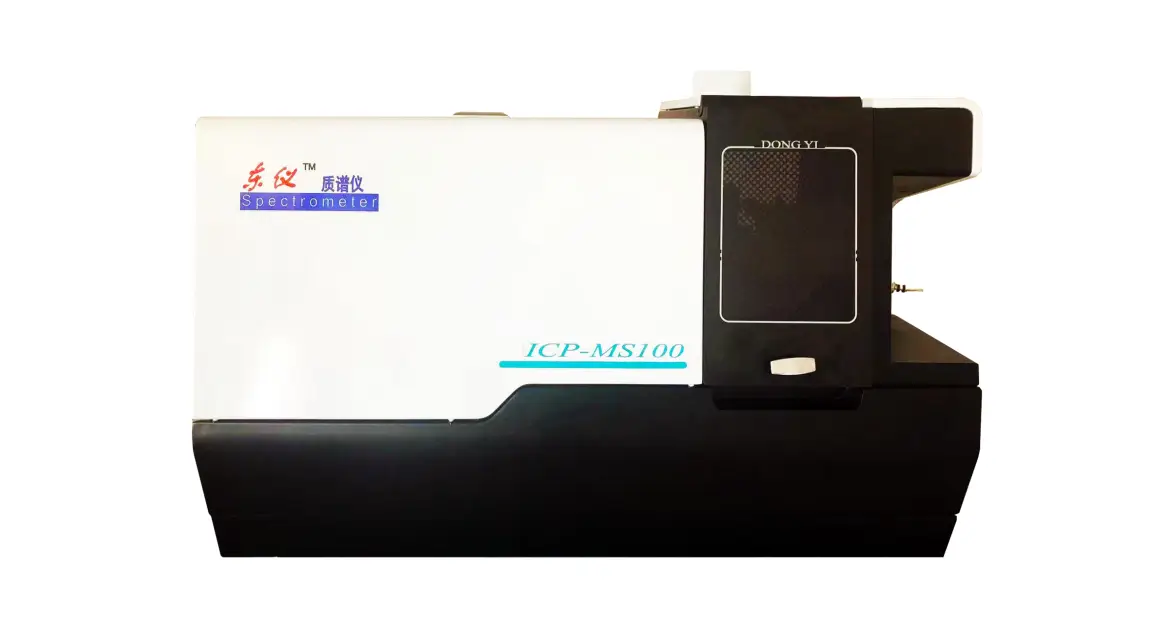
DFAIC ICP-MS100 Inductively Coupled Plasma Mass Spectrometer
Discover the DFAIC ICP-MS100 inductively coupled plasma mass spectrometer. This next-generation trace metal analysis instrument offers ppt-level sensitivity, a 2-255 amu mass range, and smart operations for modern laboratories.
Product Information
DFAIC ICP-MS100 Inductively Coupled Plasma Mass Spectrometer: A Breakthrough in Trace Element Analysis
In the modern era of scientific research and strict quality control, the demand for identifying elemental content at ultra-trace levels has become an absolute necessity. To solve this challenging analytical problem, the inductively coupled plasma mass spectrometer (ICP-MS) was developed and has firmly established itself as the most advanced elemental analysis technology available today.
Standing out in the high-end analytical instrument segment, the DFAIC ICP-MS100 model provides a comprehensive solution for laboratories worldwide by delivering a perfect combination of exceptional performance, high durability, and a highly simplified operational workflow.
1. Core Working Principle of the Inductively Coupled Plasma Mass Spectrometer
Fundamentally, an inductively coupled plasma mass spectrometer operates based on the seamless integration of two powerful core technologies:
- Inductively Coupled Plasma (ICP) Ion Source: This component serves as the high-energy atomization and ionization source. The high-temperature Argon plasma environment completely atomizes the sample and ionizes most of the elements present into monovalent positive ions (represented as M+).
- Mass Spectrometry (MS) Analyzer: This component acts as a highly precise mass screening filter. The instrument performs mass screening by selecting specific ions based on their unique mass-to-charge ratio (m/z). By detecting the exact strength of these separated ions, the system accurately analyzes and calculates the concentration of each target element.
2. Outstanding Technical Features of the DFAIC ICP-MS100
The DFAIC ICP-MS100 model boasts several valuable hardware and software upgrades designed to maximize the efficiency and accuracy of quantitative trace analysis:
High-Performance and Ultra-Stable Ion Source
The instrument features an advanced radio frequency (RF) generator capable of achieving automatic frequency modulation between 26.0 and 29.5 MHz based on the real-time sample load. The RF power matching speed is exceptionally fast, and its wide power range ensures that the high-temperature plasma remains perfectly stable. This stability significantly enhances the total ion output efficiency.
Wide Mass Range and Parts-Per-Trillion Sensitivity
The DFAIC ICP-MS100 features a wide analytical mass range extending from 2 to 255 amu, allowing it to cover and identify almost every single element on the periodic table. More importantly, the elemental detection limits of the instrument reach the ultra-trace parts-per-trillion (ppt) level for the vast majority of elements, providing absolute confidence for sensitive measurements.
High-Precision Sample Introduction Control
To ensure that the sample flow entering the plasma torch remains perfectly uniform over long testing periods, the instrument utilizes an imported, high-precision mass flowmeter. This component strictly regulates the gas pressures and the carrier aerosol introduction rate into the heart of the plasma system.
3. Key Advantages in Operation and Maintenance
Beyond its raw hardware capabilities, this inductively coupled plasma mass spectrometer successfully addresses the daily challenges of lab productivity, operational costs, and technical staffing requirements:
- Humanized One-Click Operation: The entire startup and sample analysis workflow is highly automated. Users can initiate the testing sequence with a single “one-click” command. The intuitive software interface guides the user through sample injection step-by-step, drastically reducing the professional software training requirements for laboratory technicians.
- Convenient and Extended Maintenance: The instrument features a highly accessible design. The cone mouth system can be effortlessly disassembled and cleaned. Additionally, the ion lens system is designed with a specialized deflection angle, which actively reduces ion deposition on critical components and significantly extends the required instrument maintenance cycle.
- Powerful Automatic Protection System: Safety is prioritized through integrated automatic protection mechanisms. The instrument features rapid automatic shutdowns for the vacuum system, the RF high-voltage system, and the ion source system. If any abnormal operating parameters are detected, the system immediately triggers fast protection protocols to prevent catastrophic damage to expensive internal components.
4. Diverse Applications of the ICP-MS100 System
Thanks to its ultra-low detection limits and robust matrix tolerance, the DFAIC ICP-MS100 has become an indispensable tool across a wide range of critical industries:
- Environmental Monitoring and Food Safety: Quantifying toxic heavy metals in water sources, agricultural soils, and ambient air, as well as detecting trace chemical pollutants and toxic residues in consumer food products.
- Semiconductor Material Manufacturing: Detecting extremely microscopic trace impurities within semiconductor materials, microchips, silicon wafers, and ultra-pure process chemicals.
- Biomedical and Pharmaceutical Research: Screening for heavy metal contamination in Traditional Chinese Medicine (TCM), assisting in clinical trial research, and serving as a high-precision tool for biomedical immunodiagnosis.
- Geology, Mining, and Nuclear Fields: Conducting precise isotope ratio research, analyzing complex mineral ores, and tracking ultra-trace radioactive elements in nuclear waste detection.
- Environmental Toxicology and Life Sciences: When seamlessly paired with modern chemical separation technologies (such as chromatography), the system can analyze the exact valence states and chemical morphology of highly hazardous elements like Chromium, Mercury, Arsenic, Lead, and Tin (Cr, Hg, As, Pb, Sn).
Conclusion
The inductively coupled plasma mass spectrometer DFAIC ICP-MS100 stands as a premier, highly reliable technological solution for modern testing centers, independent research institutes, and high-tech manufacturing facilities. By delivering unquestionable ppt-level precision alongside a user-friendly, well-protected design, it represents the ultimate investment for future-proof laboratory workflows.
Be the first to review “DFAIC ICP-MS100 Inductively Coupled Plasma Mass Spectrometer”
Related products
ANALYZER INSTRUMENT
DFAIC ICP-750 Inductively Coupled Plasma Optical Emission Spectrometer (ICP)

ANALYZER INSTRUMENT







Reviews
There are no reviews yet.