

 Tiếng Việt
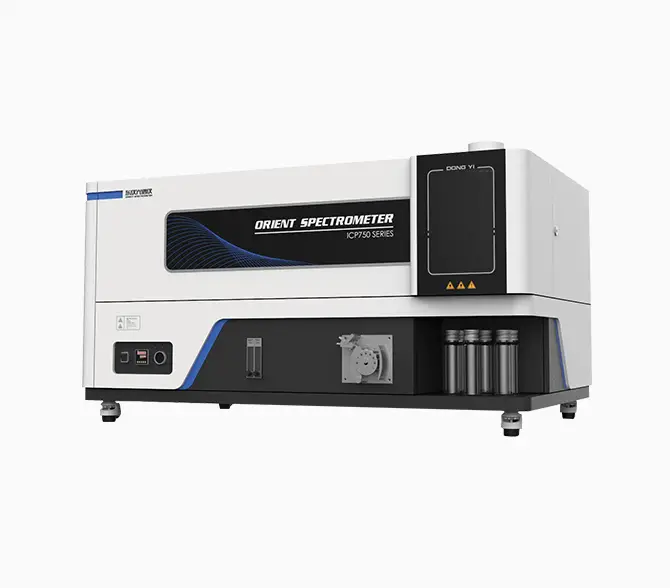
DFAIC ICP-750 Inductively Coupled Plasma Optical Emission Spectrometer (ICP)
Discover the DFAIC ICP-750 Inductively Coupled Plasma Optical Emission Spectrometer (ICP-OES). Analyze over 60 elements with high sensitivity, 16 CCD technology, and multi-industry applications.
Product Information
Inductively Coupled Plasma Optical Emission Spectrometer (ICP): The Ultimate Guide to the DFAIC ICP-750
In the era of high-tech industrial manufacturing and stringent environmental regulations, accurate elemental analysis is vital for quality control. The Inductively Coupled Plasma Optical Emission Spectrometer (ICP), specifically the ICP-750 series from DFAIC (Shandong Dongyi Photoelectric Instrument Co., Ltd.), stands out as a premier solution. It delivers exceptional testing efficiency, reliability, and precision for modern laboratories worldwide.
What is an Inductively Coupled Plasma Optical Emission Spectrometer (ICP)?
An Inductively Coupled Plasma Optical Emission Spectrometer (ICP) is a highly advanced analytical instrument used for the qualitative and quantitative determination of chemical elements. The system works by utilizing a high-temperature argon plasma source to excite atoms and ions within a sample. As these excited atoms return to their ground state, they emit light at characteristic wavelengths. The spectrometer then separates and measures this emitted light to determine the exact concentration of each element present.
Key Advantages of the DFAIC ICP-750 (Orient Spectrometer Series)
1. High-Throughput Multi-Element Analysis
The DFAIC ICP-750 model is engineered to perform simultaneous qualitative and quantitative analysis on more than 60 different elements. Whether your laboratory needs to detect non-metals, base metals, or toxic heavy metals—such as Silicon (Si), Manganese (Mn), Copper (Cu), Iron (Fe), Chromium (Cr), Lead (Pb), and Mercury (Hg)—this system processes them all in a single analysis run.
2. Advanced 16-Linear CCD Full-Spectrum Detection
Unlike traditional sequential spectrometers that scan elements one by one, the ICP-750 integrates a powerful array of 16 linear CCD chips. This cutting-edge technology allows the system to capture the entire spectrum across a wide wavelength range from 170nm to 800nm simultaneously. Consequently, lab technicians can drastically reduce operation times, minimize sample consumption, and increase daily sample throughput.
3. Paschen-Runge Optical Structure for Ultimate Stability
The device features a time-tested Paschen-Runge optical design with a 750nm focal length concave grating. A major advantage of this optical setup is the complete absence of moving mechanical parts. By eliminating mechanical wear and tear over time, the ICP-750 avoids optical alignment drift and delivers absolute, long-term measurement stability.
4. Smart PID Temperature Control and Compact RF Generator
To minimize thermal expansion and contraction within the optical chamber, an intelligent PID temperature control system keeps internal temperature fluctuations under an impressive ±0.1°C. Additionally, the high-efficiency Radio Frequency Generator (RFG) features a compact footprint. It provides a highly stable power output to sustain a steady plasma torch, ensuring robust excitation even for complex sample matrices.
5. Modular Safety Design and Intuitive Software
- User-Friendly Sample Introduction: The sample introduction system uses a modular design. Components are easy to disassemble, making routine cleaning, maintenance, and part replacement effortless.
- Multi-Tier Safety Protection: The machine features automated safety interlocks. It instantly protects the system against water pressure failure, argon gas pressure drops, over-current, over-voltage, and overheating.
- Intelligent Software Suite: The accompanying software provides an intuitive interface for spectrum display, automated calibration, peak identification, and dynamic background correction to eliminate spectral interferences.
Real-World Applications of the ICP-750 Spectrometer
Thanks to its low detection limits and excellent reproducibility, this Inductively Coupled Plasma Optical Emission Spectrometer (ICP) is widely adopted across various key industries:
- Geology and Metallurgy: Analyzing mineral compositions, determining ore grades, and controlling trace impurities in steel, copper, and specialized alloys.
- Petrochemicals and Chemicals: Inspecting raw crude oil, testing refined petroleum products, and evaluating industrial catalysts.
- Environmental and Food Safety: Monitoring heavy metal contamination in wastewater, agricultural soil, ambient air, and consumer food products.
- Nuclear Industry & Rare Earths: Supporting the purification process and quality verification of high-purity rare earth elements.
Conclusion
Investing in the DFAIC ICP-750 Inductively Coupled Plasma Optical Emission Spectrometer (ICP) is a strategic move for any professional testing laboratory. This instrument not only optimizes analytical workflows and reduces labor hours but also delivers data of the highest integrity and trustworthiness.
Be the first to review “DFAIC ICP-750 Inductively Coupled Plasma Optical Emission Spectrometer (ICP)”
Related products
ANALYZER INSTRUMENT
DFAIC ICP-MS100 Inductively Coupled Plasma Mass Spectrometer

ANALYZER INSTRUMENT







Reviews
There are no reviews yet.