

 Tiếng Việt
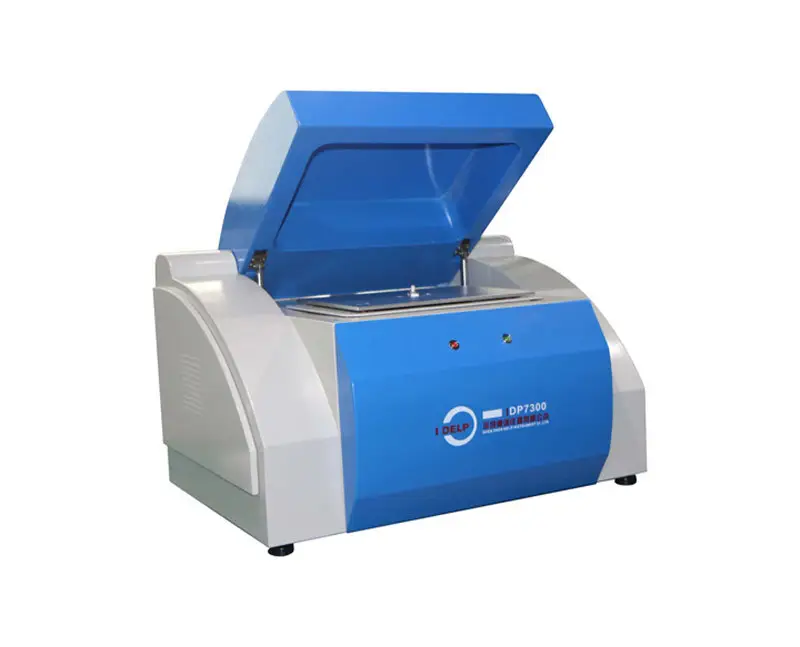
IDP7300 RoHS Detector Meter
The IDP7300 RoHS Detector Meter is the leading XRF solution for analyzing heavy metals (Pb, Cd, Hg, Cr) and Halogens. Featuring advanced X-ray Fluorescence technology, the IDP7300 delivers high-precision results, rapid testing speeds, and superior automation for the electronics manufacturing industry.
Product Information
IDP7300 RoHS Detector Meter: The Ultimate Compliance Solution for Manufacturers
In today’s global marketplace, environmental sustainability is no longer an option—it is a strict legal requirement. For enterprises manufacturing electronic components, toys, or household appliances, owning a high-performance RoHS detector meter is essential to navigate international regulations. The IDP7300 model by DELP Instrument has emerged as a premier choice, leveraging state-of-the-art X-ray Fluorescence (XRF) technology. This article provides a comprehensive analysis of why the IDP7300 is the optimal investment for your quality management system.
1. Understanding RoHS Compliance and Its Industrial Impact
RoHS (Restriction of Hazardous Substances) is a mandatory directive originated by the European Union to restrict the use of specific hazardous materials in electrical and electronic equipment (EEE). The primary substances under strict surveillance include Lead (Pb), Mercury (Hg), Cadmium (Cd), Hexavalent Chromium (Cr6+), Polybrominated Biphenyls (PBB), and Polybrominated Diphenyl Ethers (PBDE).
Integrating a professional RoHS detector meter into the production line allows businesses to:
-
- Ensure products are eligible for export to high-standard markets such as the EU, USA, and Japan.
- Mitigate legal risks and avoid heavy financial penalties associated with non-compliant hazardous material levels.
- Strengthen brand reputation as a “green” and sustainable manufacturer.
2. An Overview of the IDP7300 Model
The IDP7300 is a next-generation X-ray Fluorescence (XRF) spectrometer specifically engineered for the high-precision analysis of toxic elements and halogens. Unlike entry-level detectors, the IDP7300 integrates advanced multi-point continuous testing capabilities, designed to optimize the quality control workflow for high-capacity factories and specialized laboratories.
Impressive Technical Specifications:
-
- Analytical Range: From Sodium (Na) to Uranium (U).
- Resolution: 127±5 eV (Ensuring peak sharpness and laboratory-grade accuracy).
- Detection Limits: Cd/Cr/Hg/Br ≤ 1ppm, Pb ≤ 2ppm (Exceeding the most stringent RoHS requirements).
- Test Cycle Time: Flexible from 60 to 200 seconds depending on the sample matrix.
3. Key Advantages of the IDP7300 RoHS Detector Meter
Extreme Speed Detector Technology
The IDP7300 is equipped with a high-speed detector that significantly reduces measurement time while maintaining a superior Signal-to-Noise (S/N) ratio. This allows manufacturers to double their testing throughput compared to older generation XRF machines, ensuring that production deadlines are met without compromising safety.
Automated Multi-Point Positioning System
This is the standout feature of the IDP7300. The system allows operators to preset multiple testing points on a single large sample or across various smaller samples within the chamber. The machine then automatically navigates and tests these points sequentially. This automation minimizes human error, reduces manual labor costs, and provides a more comprehensive “map” of compliance across complex components.
Comprehensive Halogen and Heavy Metal Analysis
Beyond the standard six RoHS substances, the IDP7300 is highly effective at detecting Chlorine (Cl) to meet “Halogen-Free” requirements. Furthermore, it can analyze other hazardous heavy metals such as Arsenic (As), Antimony (Sb), Selenium (Se), and Barium (Ba). This versatility ensures that your facility is prepared for evolving environmental standards and specific client requests.
Safety and User-Centric Design
Safety is paramount when dealing with X-ray technology. The IDP7300 features a triple-layer radiation protection system, ensuring zero leakage and absolute safety for technicians. The accompanying software offers an intuitive interface and utilizes the “Fundamental Parameters” (FP) algorithm. This advanced mathematical model allows for accurate quantitative analysis even in the absence of standard reference samples, providing immense flexibility in the field.
4. Real-World Applications of the IDP7300
Due to its high sensitivity and robust build, the IDP7300 RoHS detector meter is widely utilized across various sectors:
-
- Electronics Manufacturing: Testing Printed Circuit Boards (PCBs), solder joints, plastic casings, and semiconductor components.
- Electroplating Industry: Measuring the thickness of metal coatings and the chemical composition of plating solutions.
- Toys and Textiles: Controlling lead and heavy metal content in paints, fabrics, and accessories to protect consumer health.
- E-Waste Recycling: Rapidly identifying and sorting materials based on their chemical signatures for efficient processing.
5. Conclusion
Investing in an IDP7300 RoHS detector meter is more than just purchasing a piece of laboratory equipment; it is an investment in global market access and consumer trust. With its 127±5 eV precision and industry-leading automation, the IDP7300 stands as the top-tier choice for modern Quality Assurance (QA) and Quality Control (QC) departments.
Be the first to review “IDP7300 RoHS Detector Meter”
Related products
XRF - ROHS MACHINE
XRF - ROHS MACHINE
XRF - ROHS MACHINE
GCMS-9000 Gas Chromatography-Mass Spectrometry (GC-MS) technology
XRF - ROHS MACHINE
-8%
XRF - ROHS MACHINE
Original price was: 400.000.000 ₫.370.000.000 ₫Current price is: 370.000.000 ₫.
XRF - ROHS MACHINE
XRF - ROHS MACHINE
XRF - ROHS MACHINE





Reviews
There are no reviews yet.