

 Tiếng Việt
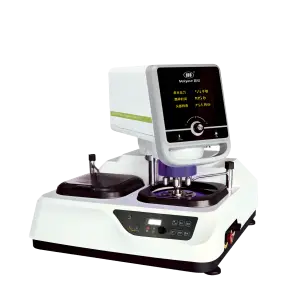
MoPao® 3S Automatic Metallographic Specimen Grinding and Polishing Machine
MoPao® 3S automatic metallographic specimen grinding and polishing machine optimizes time and ensures perfectly flat surfaces. Read our detailed review now!
Product Information
Comprehensive Review of the MoPao® 3S Automatic Metallographic Specimen Grinding and Polishing Machine
Surface preparation is the most critical and non-negotiable step in metallographic structure analysis. To achieve a flawless, scratch-free, mirror-like surface without structural deformation, modern laboratories worldwide prioritize the use of an automatic metallographic specimen grinding and polishing machine. Among the top-tier solutions available on the market today, the MoPao® 3S stands out as a groundbreaking equipment that delivers exceptional efficiency, high precision, and absolute consistency.
This comprehensive article provides an in-depth analysis of the technical specifications, structural features, and core reasons why material engineers highly rate this device.
1. Introduction to the MoPao® 3S Automatic Metallographic Specimen Grinding and Polishing Machine
The MoPao® 3S is a high-performance, benchtop, double-disc sample preparation device. It integrates an intelligent microprocessor-controlled system to automate the entire workflow. This machine handles everything from coarse grinding and fine grinding to rough polishing and final mirror polishing. It is designed to work seamlessly with a wide range of materials, including ferrous and non-ferrous metals, thermal spray coatings, and advanced composites.
Featuring a robust cast-aluminum base and a durable ABS plastic shell that resists chemical corrosion, the MoPao® 3S is an indispensable asset for R&D centers, quality assurance/quality control (QA/QC) departments, and materials science research institutes.
2. Key Technical Specifications of MoPao® 3S
To fully grasp the capabilities of this advanced automatic metallographic specimen grinding and polishing machine, let us review its core operational specifications:
- Dual-Disc Configuration: The machine features two independent working wheels with a standard diameter of φ250mm (with a φ300mm option available). This allows operators to run grinding and polishing processes simultaneously without constant sandpaper changes.
- Variable Speed Control: The grinding discs support stepless speed regulation from 50 to 1000 RPM. They can also operate at two pre-set constant speeds of 150 RPM and 300 RPM. The automatic polishing head rotates independently at a stepless speed of 50–150 RPM.
- Pneumatic Force System: Utilizing a single-point loading mechanism, the pneumatic system delivers a stable, adjustable force ranging from 5N to 60N onto each individual specimen.
- High Throughput Capacity: The intelligent central sample holder can securely clamp and process 4 to 6 specimens (standard φ30mm diameter) simultaneously in a single operational cycle.
3. Outstanding Advantages of the MoPao® 3S Automatic System
🌟 Maximized Time Savings and Lab Productivity
Traditional manual grinding and polishing require significant time and rely heavily on the technician’s skill level. The MoPao® 3S upgrade completely eliminates this bottleneck. By processing multiple samples simultaneously across two rotating wheels under automated control, sample preparation speed increases by 4 to 5 times compared to manual methods.
🌟 Uniform Surface Quality and Flatness
Manual pressure varies naturally from person to person. The MoPao® 3S automatic metallographic specimen grinding and polishing machine utilizes precise pneumatic pressure distributed evenly onto each single point. This eliminates human error entirely. The resulting sample surfaces achieve ideal flatness, preventing edge rounding and preserving the microstructural integrity of the material boundary layer.
🌟 Intelligent Cooling and Operational Safety
High friction during aggressive grinding generates substantial heat, which can alter the delicate metallographic structure of the specimen. The MoPao® 3S features an integrated multi-directional water cooling nozzle. It sprays water continuously to cool the sample surface and flush away residual abrasive particles, keeping the working workspace clean.
4. Practical Industry Applications
The MoPao® 3S serves a broad spectrum of manufacturing and research industries:
- Metallurgy and Foundries: Inspecting the microstructure of steel, cast iron, aluminum alloys, and brass.
- Automotive and Aerospace: Evaluating weld joint quality, surface plating thickness, and structural fatigue in load-bearing components.
- Academic Education: Providing intuitive, practical training in materials science laboratories at technical universities.
5. Conclusion
The MoPao® 3S automatic metallographic specimen grinding and polishing machine represents a highly valuable investment for any laboratory aiming for professional automation. Beyond optimizing preparation time, the machine guarantees excellent repeatability for all material structure analysis results.
Be the first to review “MoPao® 3S Automatic Metallographic Specimen Grinding and Polishing Machine”
Related products
SAMPLE PREPARATION MACHINE
SAMPLE PREPARATION MACHINE
SAMPLE PREPARATION MACHINE
SAMPLE PREPARATION MACHINE
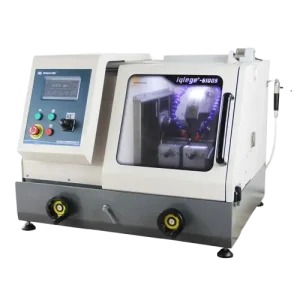
iqiege®6100S Automatic Metallographic Specimen Cutting Machine

SAMPLE PREPARATION MACHINE





Reviews
There are no reviews yet.