

 Tiếng Việt
User manual
What is a Metallographic Cutting Machine? A Comprehensive Guide to Choosing the Right Equipment
13
Jun
Jun
What is a Metallographic Cutting Machine? A Comprehensive Guide to Choosing the Right Equipment
In metallurgy, mechanical manufacturing, and quality assurance (QA/QC), analyzing the microstructure of metals is a mandatory step. To obtain accurate microstructural images under a microscope, the specimen preparation process is decisive. Among all stages, the metallographic cutting machine serves as the primary and most critical equipment in this processing chain.
This article delivers a comprehensive look at the structure, operating principles, and expert selection criteria for high-quality metallographic cutting machines inside modern laboratories.
1. What is a Metallographic Cutting Machine?
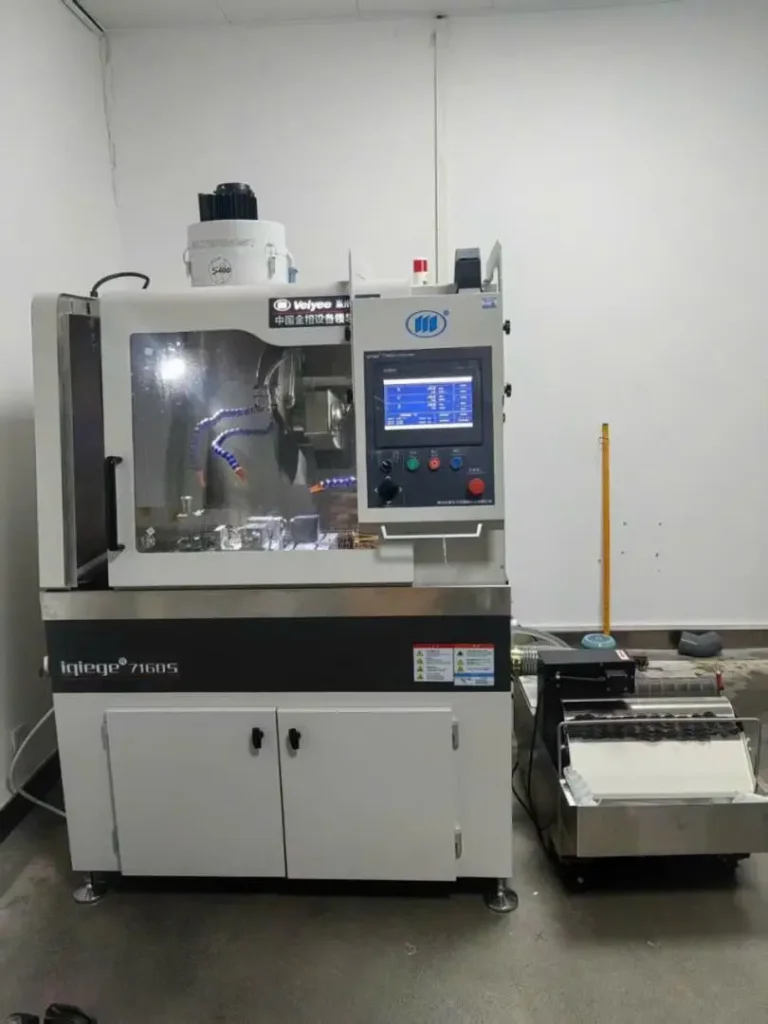
A metallographic cutting machine (also known as a specimen cutter or metallographic abrasive cutter) is specialized equipment designed to slice metal, alloy, or composite specimens into appropriate sizes for microscopic examination.
Unlike conventional workshop cutters, this equipment features specialized engineering to slice target materials without altering the inherent microstructure of the metallic crystalline lattice.
Specimen Preparation Workflow:
Specimen Cutting (Precision) -> Mounting (Edge Protection) -> Grinding & Polishing -> Microstructure Analysis
Specimen Cutting (Precision) -> Mounting (Edge Protection) -> Grinding & Polishing -> Microstructure Analysis
2. Why Use a Specialized Metallographic Specimen Cutter?
When slicing structural metals, heavy friction between the abrasive wheel and the material surface generates massive localized thermal energy. If you utilize traditional mechanical saws:
- High temperatures alter the grain structure, causing artificial localized hardening or phase transformations.
- Aggressive structural forces introduce severe mechanical deformation on the subsurface layers around the cutting zone.
A specialized metallographic cutting machine completely eliminates these errors by incorporating high-pressure cooling systems that spray coolant fluids directly onto the cutting interface. This mechanism preserves the pristine “metallographic” condition of your specimen, ensuring that subsequent microscopic evaluations yield 100% accurate structural data.
3. Popular Types of Metallographic Cutting Machines
Depending on your production volume and specific material hardness, these units fall into three distinct operational categories:
Manual Metallographic Cutting Machines
- Characteristics: Operators manually actuate a lever arm to push the rotating abrasive blade down into the fixed material.
- Advantages: Lower capital investment, simple mechanics, and exceptionally durable structural components.
- Best For: Small-scale research laboratories, low-volume testing frequencies, or processing soft non-ferrous metals like aluminum and copper.
Automatic Metallographic Cutting Machines
- Characteristics: The cutting cycle executes automatically via programmable software or a touchscreen control interface. Users configure independent feed rates and cutting paths.
- Advantages: High precision, ultra-smooth surface finishes, and the elimination of human errors caused by uneven manual feed pressure.
- Best For: Large-scale manufacturing plants and third-party material testing centers requiring continuous, highly uniform sample output.
Low-Speed Precision Cutters
- Characteristics: These units utilize ultra-thin diamond wafer blades operating at significantly lower rotational speeds.
- Best For: Sectioning brittle, ultra-hard materials, delicate minerals, or tiny electronic micro-components where micro-cracking and structural burrs must be completely avoided.
4. Key Technical Specifications to Consider
To choose an optimal machine configuration for your testing lab, analyze these technical parameters closely:
- Wheel Diameter: Industry standards range across 200mm, 250mm, 300mm, and 400mm options. Larger blade diameters expand your physical capacity to cut thick bar stocks.
- Maximum Cutting Capacity: This metric dictates the absolute maximum diameter of a solid metal bar (e.g., Ø50mm, Ø80mm, or Ø100mm) that the internal chamber can physically handle.
- Rotational Speed (RPM): Variable speeds typically span from 500 to 3000 RPM. Advanced modern machines incorporate variable frequency drives (Inverters) to process different material hardness levels efficiently.
- Cooling System: Prioritize models engineered with independent, closed-loop recirculating coolant tanks to save water, filter out metallic sludge, and maximize heat dissipation.
5. Best Practices for Safe and Efficient Operation
- Select the Correct Wheel: Match the wheel matrix to your metal type (Aluminum Oxide wheels for ferrous steels, Silicon Carbide wheels for cast irons/non-ferrous alloys, and Diamond wheels for advanced ceramics).
- Secure the Workpiece firmly: Utilize dedicated quick-clamping vises or V-blocks to anchor the specimen securely, preventing blade shattering or lethal workpiece ejection.
- Maximize Coolant Delivery: Position the dual cooling nozzles to spray directly at the point of contact where the blade penetrates the metal.
- Perform Daily Maintenance: Corrosive metal swarf and abrasive residue degrade stainless steel chambers over time. Always wash down the cutting compartment thoroughly at the end of every shift.
Conclusion
Investing in a robust metallographic cutting machine is the baseline foundation for elevating your corporate material inspection capabilities. Depending on your corporate budget and specimen dimensions, you can strategically select an economical manual configuration or a high-precision automated production model.